
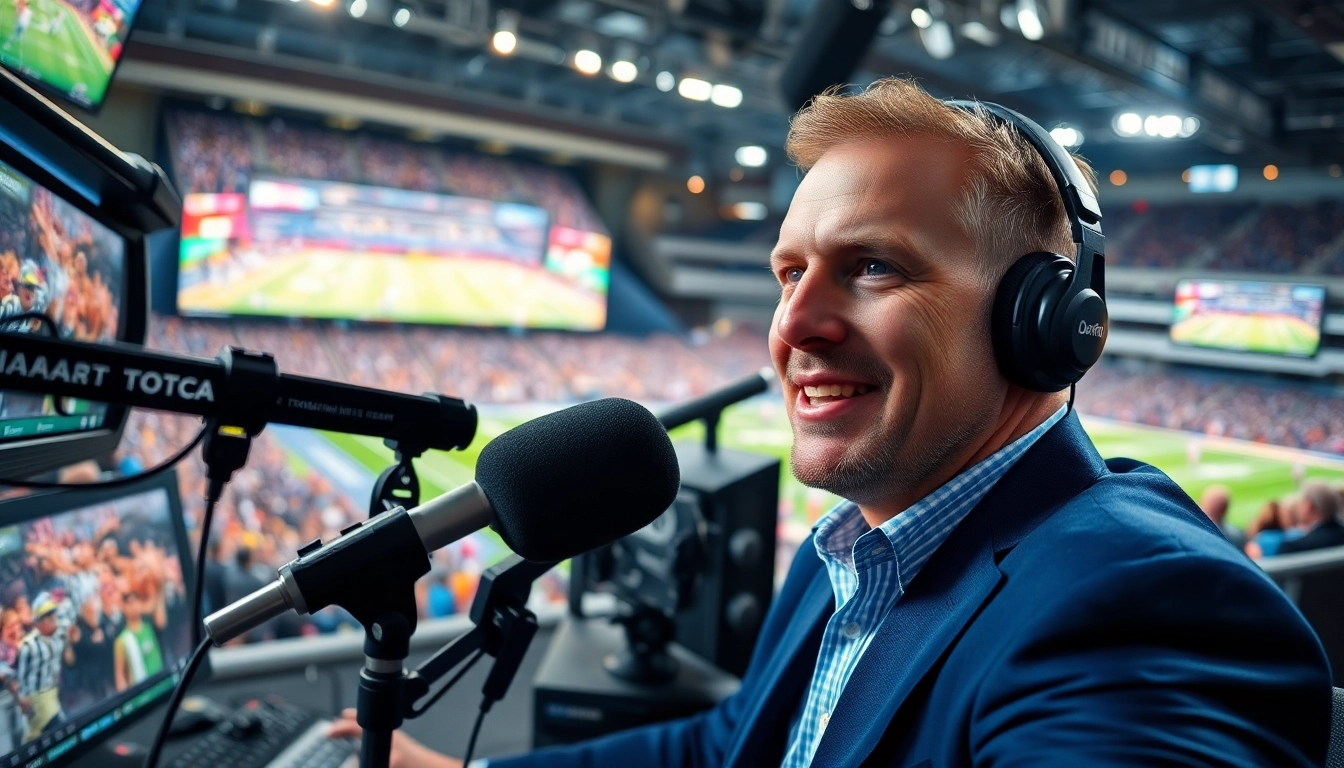
Understanding the Basics of Sports Broadcasting
Defining Sports Broadcasting
Sports Broadcasting refers to the distribution of sports events through various mediums including television, radio, and online platforms. It encompasses not just the live airing of sporting events but also the accompanying commentary, analysis, and interactions with fans. The primary goal is to deliver an engaging and informative experience to viewers and listeners worldwide. With the evolution of technology, Sports Broadcasting has transitioned from traditional broadcasting to integrated digital platforms, creating diverse opportunities for engagement.
The Role of a Sports Broadcaster
A sports broadcaster serves as the voice of the game, transmitting emotions and narratives that enhance the viewing experience. Unlike journalists, they not only report on the action but also interpret it, providing context and insights that help audiences understand the sport better. Their role includes informing, entertaining, and maintaining a seamless flow of information that engages viewers, often reacting in real time to unfolding events.
Fundamental Skills Required
To excel in sports broadcasting, several core skills are essential:
- Communication: Clear and articulate speech is crucial. Broadcasters must convey insights quickly and effectively.
- Knowledge of the Sport: Comprehensive understanding of the game, including rules, history, and statistics, enhances credibility.
- Analytical Skills: Ability to analyze plays and players provides depth to commentary.
- Technical Proficiency: Familiarity with broadcasting equipment and software is necessary for smooth operations.
- Adaptability: The ability to handle unexpected changes or incidents during live broadcasts is vital.
Preparing for a Live Sports Broadcast
Researching Teams and Players
Effective sports broadcasting starts long before the microphone is on. Deep research into teams and players enhances the broadcaster’s ability to provide rich, relevant content. This includes understanding player statistics, recent performance trends, injury updates, and team dynamics. Engaging with social media platforms where athletes share personal stories can yield valuable insights that resonate with audiences.
Crafting the Perfect Script
A well-prepared script serves as the backbone of a successful broadcast. It should include key talking points, transitions, and room for improvisation. A balance between structure and spontaneity is essential—while scripted segments ensure important information isn’t overlooked, taking the opportunity to add personal commentary and anecdotes can make the broadcast more relatable and engaging.
Setting Up Technical Equipment
A technical setup for broadcasting involves ensuring all equipment is functioning properly. This includes microphones, cameras, mixing consoles, and streaming software. Conducting sound checks, ensuring adequate lighting, and verifying internet stability are crucial steps. Advanced technology like augmented reality (AR) can also enhance viewer engagement, but it requires prior testing and knowledge of operations.
Best Practices During a Broadcast
Engaging with the Audience
During a live broadcast, engaging with the audience can significantly enhance viewer experience. Broadcasters can interact through social media, responding to viewer comments, or incorporating audience polls. Using inclusive language that acknowledges fans’ emotions and experiences can create a sense of community around the broadcast.
Managing On-Screen Dynamics
The ability to manage on-screen dynamics is crucial. This involves coordinating with co-commentators, maintaining eye contact with the camera, and controlling body language. Should technical issues arise, remaining calm and composed while addressing viewers is essential for managing potential distractions effectively.
Real-Time Data Utilization
Leveraging real-time data during broadcasts can enrich the viewer’s understanding. Utilizing statistics such as player metrics or tracking sports analytics enables broadcasters to provide immediate context to play situations. Integrating graphics and visual data displays can also aid in conveying complex information succinctly and engagingly.
Advanced Techniques in Sports Broadcasting
Utilizing Social Media
In today’s digital age, social media plays an integral role in sports broadcasting. Broadcasters can create live content, engage with fans in real time, and promote upcoming events through platforms like Twitter, Instagram, and Facebook. Sharing highlights and behind-the-scenes content enhances audience connection and retention, giving broadcasters a valuable tool for audience growth.
Incorporating Analytics and Insights
Using analytics tools to gather insights on viewership patterns and audience preferences is crucial for continuous improvement. By analyzing which segments resonate most with the audience, broadcasters can tailor content accordingly. Metrics such as viewer engagement rates and audience demographics provide valuable information that can be leveraged for future broadcasts.
Building a Unique Commentary Style
Developing a unique commentary style is essential for distinguishing oneself in a competitive landscape. This can involve employing a distinct tone, using personal anecdotes, or integrating humor. Broadcasters should strive to be authentic while building their brand narrative—consistent storytelling helps forge a connection that can keep audiences coming back.
Measuring Success in Sports Broadcasting
Key Performance Metrics
Measuring the success of sports broadcasts involves several key performance metrics. These can include viewer ratings, social media engagement levels, audience retention rates, and feedback from surveys. Analyzing these metrics helps broadcasters understand what works and identify areas needing improvement.
Feedback and Continuous Improvement
Soliciting feedback from viewers post-broadcast is vital for ongoing growth. This can be accomplished through surveys, social media comments, or focus groups. Regularly evaluating performance based on viewer feedback allows broadcasters to adapt and innovate, thereby continually enhancing the viewing experience.
Future Trends in Sports Broadcasting
Emerging trends indicate a shift towards more immersive viewing experiences, with advancements like virtual reality (VR) and augmented reality (AR) set to play major roles. Moreover, personalized content delivery adapted to individual viewer preferences indicates a dynamic shift in how sports broadcasting will evolve. Keeping an eye on technological trends can help broadcasters stay ahead of the curve.
Frequently Asked Questions (FAQs)
What skills are essential for sports broadcasting?
Essential skills include strong communication, in-depth sports knowledge, analytical capabilities, technical proficiency, and adaptability to handle live situations.
How important is audience engagement during broadcasts?
Audience engagement is crucial, as it enhances viewer experience, builds community, and helps maintain viewer interest throughout the broadcast.
What role does social media play in sports broadcasting?
Social media is vital for creating interactive content, engaging with fans, and promoting events, enhancing the overall experience for viewers.
How can broadcasters measure their success?
Broadcasters can measure success through viewer ratings, social media interactions, audience retention metrics, and direct feedback from surveys.
What are future trends in sports broadcasting?
Future trends include immersive technologies like VR and AR, personalized content delivery, and enhanced real-time data usage during broadcasts.